
Honed, Polished & Leathered Countertop Finishes: Complete Guide
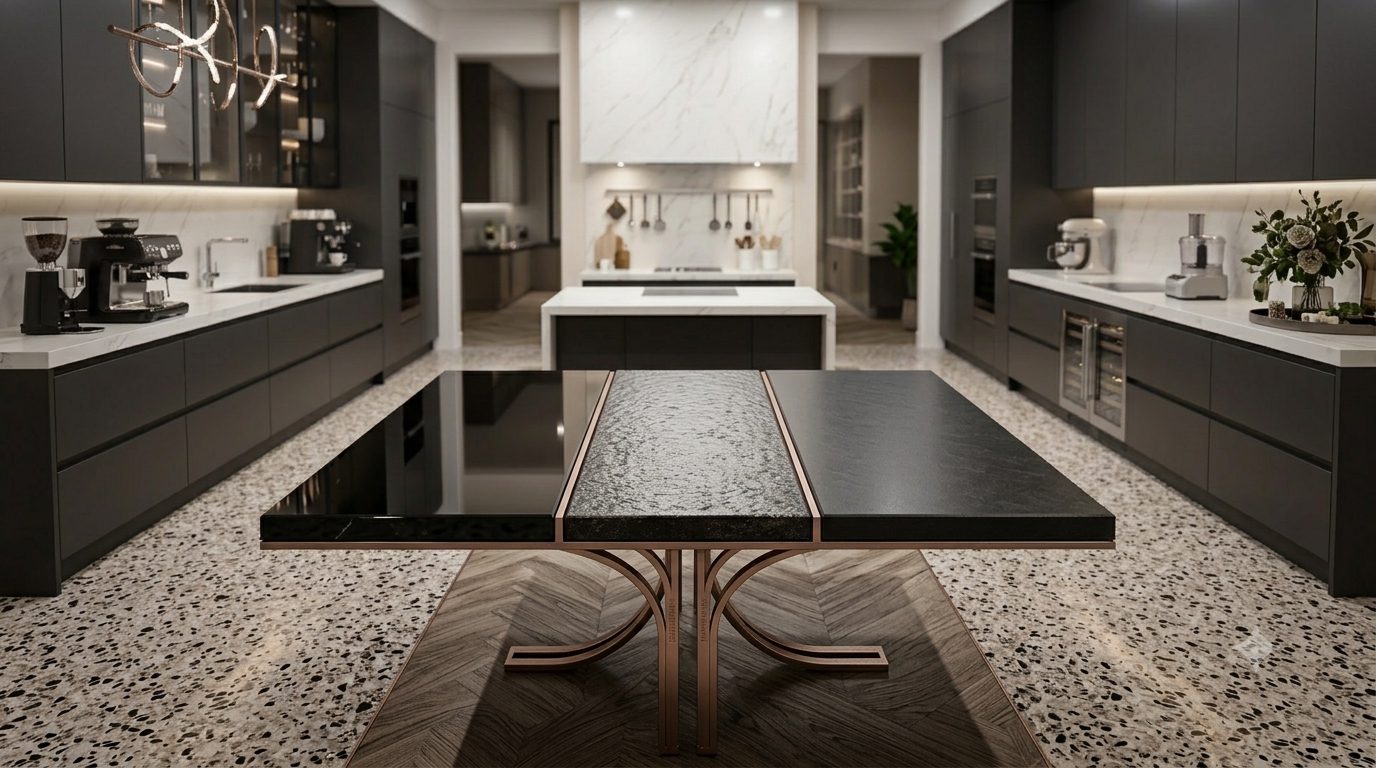
When planning a kitchen or bathroom remodel, most homeowners focus on choosing the perfect slab for their space. But before your countertop is fabricated, there’s another choice that can totally alter the look and feel: the finish.
The slab finish you select affects the look, feel, and performance of the surface. It influences how much maintenance is required, if it hides fingerprints and scratches, or even how the stone’s color and veining will appear. The same slab can look drastically different depending on the finishing type.
This guide compares the differences between honed, polished, and leathered finishes to help you confidently choose the right surface for your space.
What Are Countertop Finishes for Natural Stone?
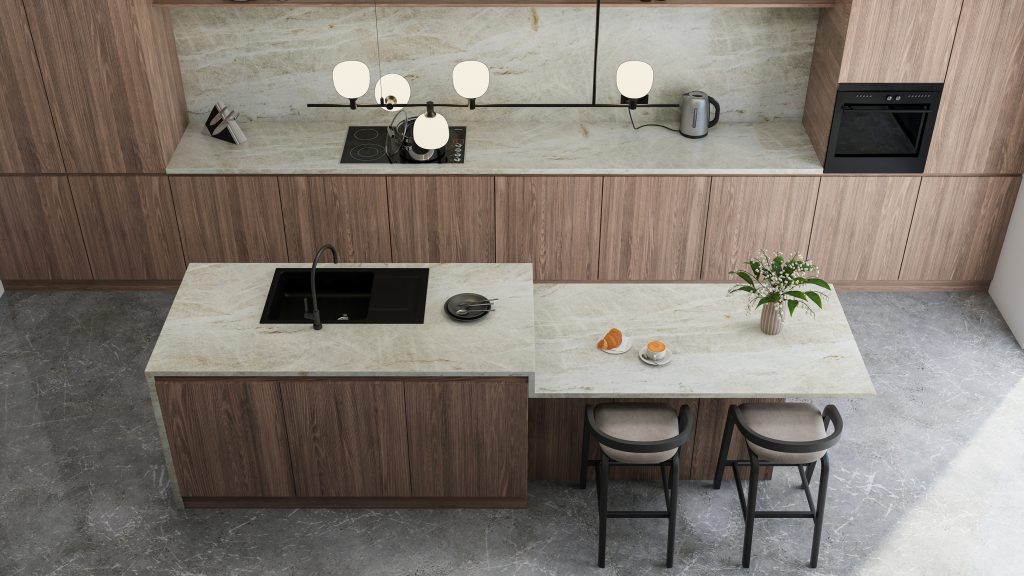
A countertop finish is the surface treatment applied to natural stone or engineered quartz, such as PentalQuartz®,after the slab has been cut and shaped. It is one of the last steps in stone fabrication and also one of the most defining steps for the final product.
The finish affects the texture, shine, and porosity of the surfaces. It affects how vividly the stone’s colour and veining come through. It even affects how the stone behaves over time, how quickly it absorbs spills, and how well it hides scratches.
The three most common countertop finishes are polished, honed, and leathered. Each type has unique visual traits, maintenance requirements, and best uses. Understanding the differences is the first step in choosing the ideal countertop finish for your kitchen, bathroom, or any living space.
Explore our Natural Stone collection: Natural Stone Countertops Marble, Granite & Quartzite
Polished Countertop Finish: The High- Gloss Classic
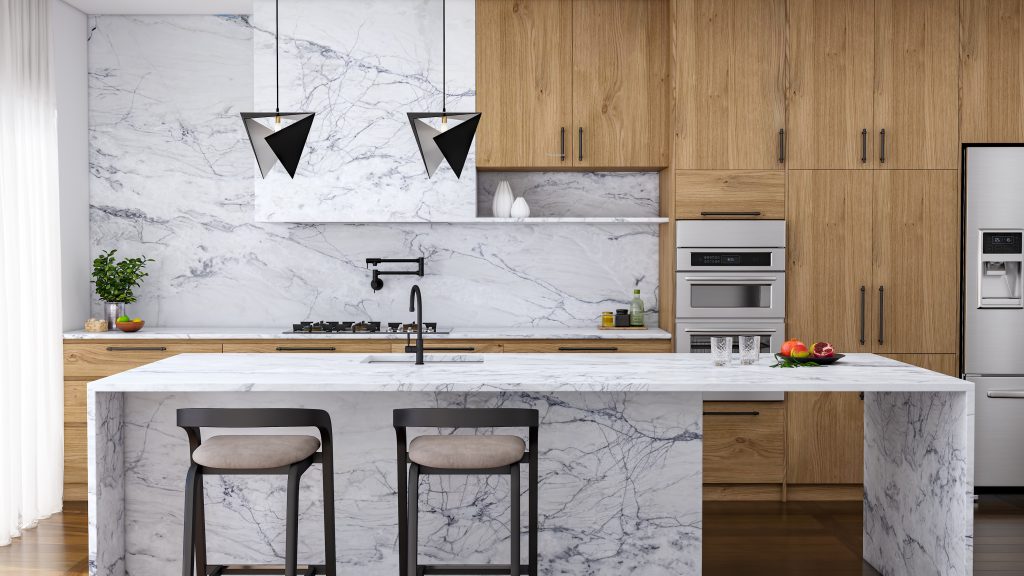
The polished finish is the most recognized type of countertop finish. Polishing the stone surface to a high gloss, using progressively finer abrasives until a mirror-like gloss makes the stone finish polished.
How It Looks and Feels
A polished surface is smooth to the touch and highly reflective, to dramatically enhance the depth and color of the stone. Veining in a polished marble appears vivid, while polishing granite with dark tones can become richer. It is both luxurious and striking.
Pros
- Highly reflective—brightens spaces and enhances natural light
- Highlights rich colors and veining in stone
- The non-porous, smooth surface is easier to wipe clean
- Generally available and often the most affordable finish option
Cons
- Easily shows fingerprints, water spots, and smudges
- Scratches are visible on a glossy surface
- Can feel formal or cold in relaxed, rustic, or farmhouse-style spaces
Best Materials for a Polished Finish
Granite, marble, quartzite and engineered quartz all take polished finishes well. It’s the perfect finish for materials with strong veining you wish to highlight.
Polished finish would be ideal for bathrooms, formal dining areas, and kitchen islands where visual impact is important.
If you are confused about what material to choose for your countertop, read How to choose the best countertops for your home in 2026.
Honed Countertop Finish: Matte, Sophisticated & Practical
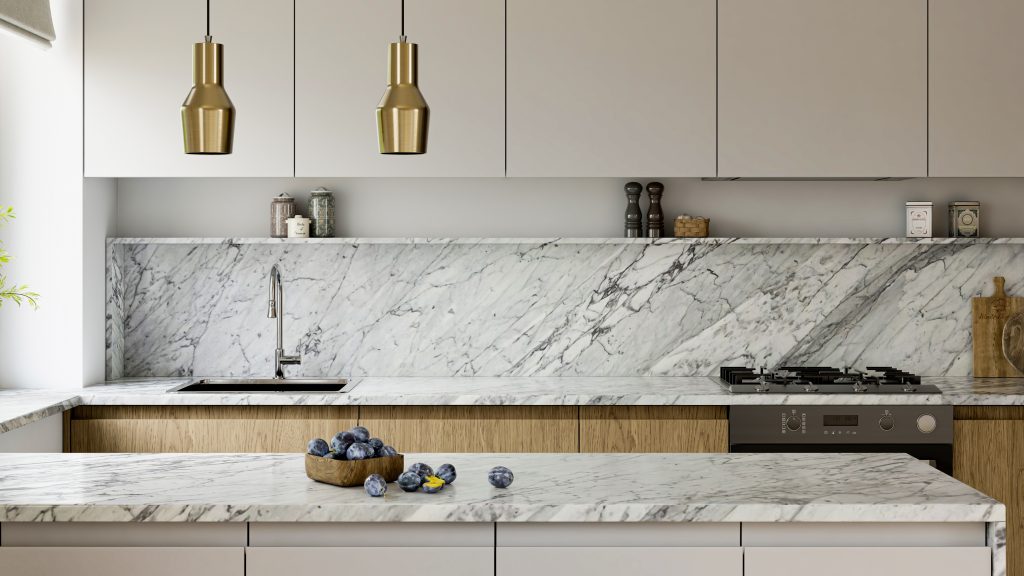
A honed finish is becoming sought-after for its understated, elegant, and acceptance in both modern and transitional interiors. Compared with polished and leathered options, honed often ranks as the best choice for everyday kitchen use.
Best Countertop Finish for Kitchen Spaces: Why Honed Wins
A honed finish is both beautiful and practical, for high-traffic areas. In a busy kitchen, it does not harshly reflect overhead lighting, making food prep easier to see. Fingerprints and smudges are less visible than on a polished surface, making it the best countertop finish for kitchens or bathrooms that see heavy daily use.
Next, we will review the benefits of a honed finish on three stone types, marble, granite and quartzite.
Honed Marble Countertop: Beauty & Care
Honed marble is one of the most sought-after surfaces in kitchen and bathroom design. White marbles like Bianco Carrara, Calacatta, and Statuario take on a completely different character when honed, creating a softer, velvety appearance, and less formal than their polished counterparts.
The look is beautiful. The care requirements are real.
Marble is naturally porous and sensitive to acid, and a honed marble countertop is more vulnerable than a polished marble countertop because it lacks that sealed surface layer. Lemon juice, vinegar, and wine — these can etch the surface if they sit. That doesn’t mean honed marble is impractical, but it does mean you need to stay on top of sealing (every 6–12 months, depending on use) and wipe spills up promptly.
Use an impregnating sealer, not a topical coating, which adds an unwanted sheen to a matte countertop surface. A simple water test tells you when it’s time to reseal: if water soaks instead of beading up, it’s time.
For kitchens that see heavy use, honed quartzite is worth considering as an alternative to marble. It gives you the same matte sophistication with significantly better resistance to scratching and etching.
Honed Granite Countertop Pros and Cons
Honed granite is a different proposition from honed marble. Granite is harder and less porous to begin with, which means a honed finish on granite is more forgiving than honed marble — less prone to etching, less likely to absorb stains quickly.
Pros:
- Softer, less industrial-looking than polished granite
- Better at hiding fingerprints and day-to-day marks
- Less prone to etching than honed marble
- Works particularly well in casual, rustic, or farmhouse kitchens
Cons:
- More porous than polished granite — needs regular sealing
- Doesn’t show off the stone’s colour and depth as vividly as polished
- Light-colored honed granite can show oil absorption marks
If you want the matte look but are nervous about maintenance, honed granite is a safer bet than honed marble. It’s more resilient and less demanding.
Honed Quartzite Countertop: Best of Both Worlds
This is the combination that designers keep recommending, and for good reason.
Quartzite is one of the hardest natural stones available — significantly harder than marble and comparable to granite. When you hone a quartzite slab, you get the warm, matte aesthetic of honed marble without the fragility. No etching from acids, better scratch resistance, and a surface that holds up to serious kitchen use.
Honed quartzite slabs work especially well for large kitchen islands, bathroom vanities, and outdoor applications where you want a refined look without the upkeep anxiety that comes with honed marble.
If you love the look of honed marble but are a serious cook who doesn’t want to worry about every splash of lemon juice, honed quartzite is the answer.
Leathered Countertop Finish: Texture, Character, and Depth
Leathered Granite Countertop: Style & Maintenance
Leathered granite is where this finish really shines. Dark granites like black, deep navy, dark green look extraordinary when leathered. The brushing process brings out a richness and depth in the stone that polishing actually flattens out. Polished black granite can end up looking almost plastic; leathered black granite looks like it was pulled from the ground.
On the practical side, leathered granite hides everyday marks better than either polished or honed. Fingerprints, water spots, light scratches — the texture scatters light in a way that makes all of these nearly invisible. It’s genuinely the lowest maintenance finish for stone that sees heavy use.
The cleaning consideration is real though: the textured surface can trap crumbs and debris, so a soft brush or damp cloth works better than a simple wipe. Seal once a year with a penetrating stone sealer and blot any oil or liquid spills before they sit.
Leathered finishes aren’t available on all stones. They work best on granite and quartzite. Marble is generally too soft for the brushing process.
Pros
- Hides scratches, fingerprints, and water spots better than polished or honed finishes
- Adds tactile depth and visual character not found in other finishes
- Leathered black granite and dark stones appear exceptionally rich, which makes Negresco one of our most-requested slabs
- Highly durable and resistant to wear in busy areas
Cons
- Leathered surfaces require careful cleaning — the texture can trap crumbs and debris
- You’ll find sealing takes a bit more effort due to the uneven surface
- Not available on all stone types — best suited to granite and quartzite
Honed vs Polished vs Leathered - Full Countertop Finish Comparison
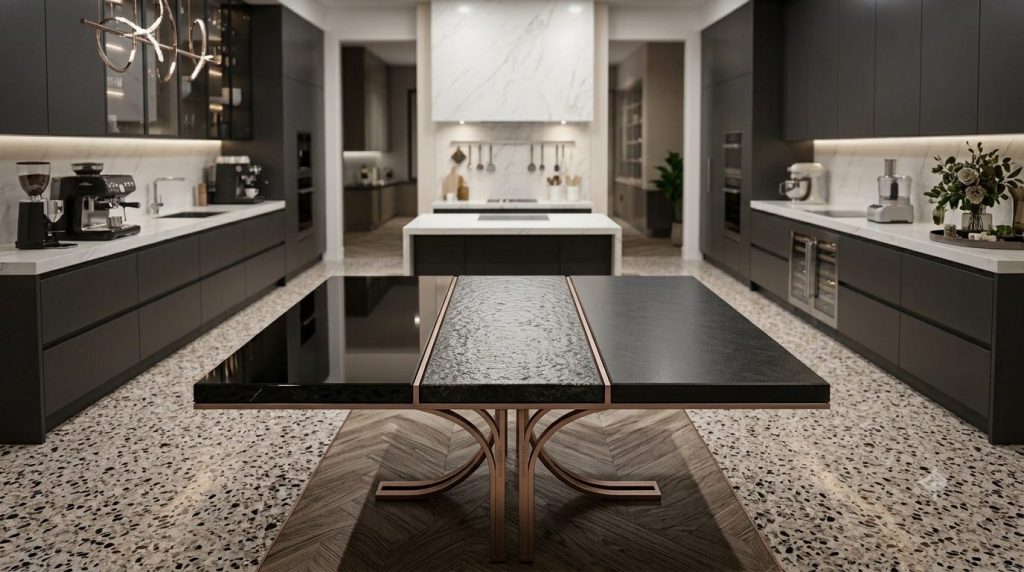
This countertop finish comparison chart quickly shows the differences between honed vs polished vs leathered finishes. You can easily find the best finish types for countertops based on your specific needs.
Feature | Honed | Polished | Leathered |
Sheen Level | Matte/flat | High gloss | Low satin |
Scratch Visibility | Moderate | Shows easily | Hides well |
Stain Risk | Higher | Lower (sealed) | Moderate |
Sealing Required | Yes (often) | Yes | Yes |
Maintenance | Regular seal | Easy wipe | Moderate |
Ideal Room | Kitchen, bath | Bath, dining | Kitchen, outdoor |
Fingerprint | Moderate | Shows easily | Hides well |
Sealing Frequency | Every 6-12 months | Once a year | Once a year |
Best Stone Type | Marble, quartzite, limestone | Granite, marble, quartzite | Granite, quartzite |
How to Choose the Best Countertop Finishes for Kitchen and Home
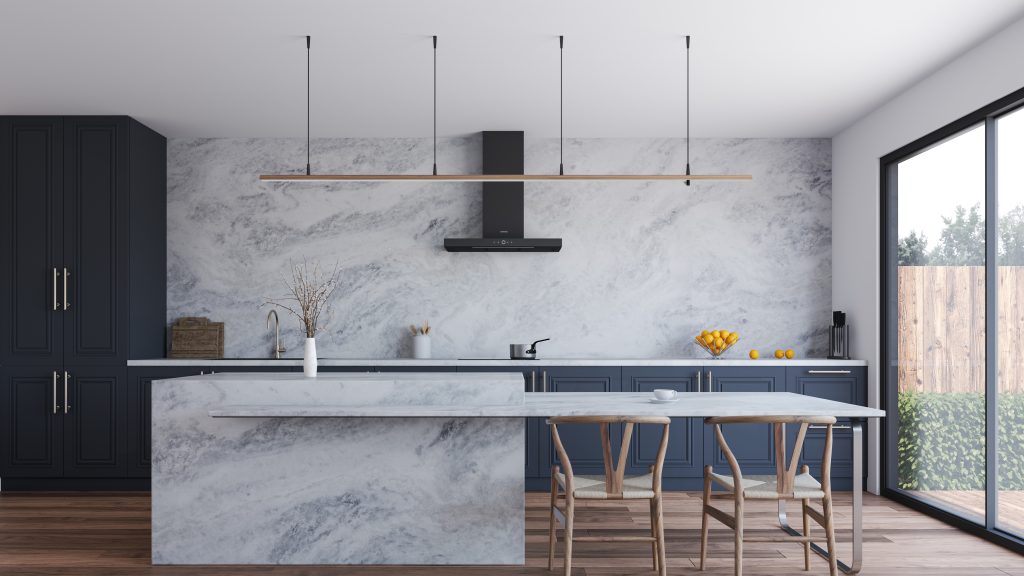
Choosing the right finish is rarely about looking alone. It comes down to three things: how you use the space, which stone you’ve chosen, and how much maintenance you’re willing to do.
Consider Your Lifestyle First
Do you have kids running around or a kitchen that sees a lot of action? Go for leathered or honed surfaces — they handle spills and wear better than polished stone. If you’re worried about scratches, leathered finishes do the best job of hiding them since their texture scatters light and covers little dings that would jump out on a polished countertop.
Match the Finish to the Room
- In the kitchen, honed or leathered finishes are practical — you won’t be constantly fussing over smudges or nicks. If you want your island to make a statement, polished is the way to go.
- Bathrooms are a bit more flexible — you can use polished for a shiny, dramatic effect, honed if you want something softer and calming, or leathered for a subtle, spa-like feel. Just match the finish to how you use the room and what vibe you want, and you’ll end up with something that really works.
- If you are planning an outdoor kitchen, a leathered granite or quartzite would be a better choice for durability and weather performance.
- Living/dining: Polished marble for formal elegance.
Think About Maintenance Honestly
If you go with a leathered finish, you’ll need to stay on top of the cleaning. Crumbs and gunk love to get stuck in all those little grooves, so regular wiping is a must. And don’t forget these surfaces need to be sealed once a year to keep them looking good. Honed marble needs even more attention. It’s more sensitive to things like lemon juice or vinegar, so you’ll want to reseal it every 6 to 12 months.
With polished surfaces, cleaning is a breeze. Just a quick wipe does the trick, but forget about hiding smudges or fingerprints; they pop out right away. So, if your kitchen doesn’t see much action and you want something eye-catching, pick polished marble. It’s got that sleek, dramatic look. But if you actually spend a lot of time in the kitchen and want something more forgiving for day-to-day mess, honed marble is a better bet — just remember to keep up with the sealing.
What is the stone type?
- For Marble: Honed is almost always the professional recommendation to mitigate the visibility of acid etching.
- For Dark Granite: Leathered is stunning. Polished black granite can often look like a “black hole” or a piece of plastic because it is so reflective; leathering gives it an organic soul.
- For Quartzite: This is a very hard stone. Polishing it creates a diamond-like brilliance but leathering it can bring out “crystals” in the stone that you wouldn’t otherwise feel.
Care & Maintenance Tips by Finish Type
Caring for Polished Countertops
- Wipe daily with a soft cloth and a pH-neutral stone cleaner
- Seal once a year to maintain stain resistance
- Avoid abrasive scrubbers, they can dull the polish over time
Caring for Honed Countertops
One of the most common questions we get about honed marble is how to seal it. Use an impregnating sealer for honed stone; it penetrates the surface for protection without adding shine. How often should you seal honed countertops?
Typically, every 6 to 12 months, depending on usage. Regular sealing helps prevent staining and etching.
See These Countertop Finishes In Person: Visit a Showroom
Architectural Surfaces has showrooms nationwide where you can touch and compare all three finishes side by side, on real slabs, under real lighting. Whether you’re drawn to the mirror-like brilliance of polished quartzite or the velvety softness of honed white marble, seeing it in person changes everything.
Find a showroom near you and bring your design vision to life with the guidance of our stone specialists.
FAQs
1. Which countertop finish hides scratches?
Leathered finishes are the best option for hiding scratches. The textured surface diffuses light, making minor abrasions virtually invisible. Honed finishes are a close second. Polished countertops, while beautiful, reveal scratches most clearly due to the high-gloss surface.
2. What is the difference between leathered vs honed granite?
Both are matte-look finishes, but leathered granite has a textured, dimpled surface created by brushing, while honed granite is completely smooth and flat. There are differences in the maintenance, such as leathered requiring brushing to clean the texture, while honed requires more frequent sealing. A homeowner may choose leathered for durability and low maintenance, or they may seek honed for a cleaner, more minimal aesthetic.
3. How do I maintain a leathered finish countertop?
Leathered finish maintenance is straightforward: wipe down daily with a soft brush or damp cloth, seal once a year with a penetrating stone sealer, and blot any oil or liquid spills promptly.
4. How to seal honed surfaces and how often?
Use an impregnating sealer designed for honed stone, and never a topical coating, which would add unwanted sheen. Apply after cleaning the surface thoroughly. Sealing honed marble countertop surfaces every 6–12 months is standard. High-traffic kitchens may need sealing closer to every 6 months. A simple water test tells you when it is time: if water soaks in immediately instead of beading, reseal.
5. What is the best finish for marble countertops?
The best finish for marble countertops depends on how you use your kitchen. Polished is the top choice for most homeowners seeking elegance and practicality. Honed and leathered finishes offer appealing alternatives for those who prefer a softer, matte aesthetic — but they demand more diligent sealing and maintenance. Ultimately, polished marble or quartzite strikes the best balance between visual impact, durability, and day-to-day ease of care for the widest range of households.
6. Does a honed countertop stain more easily than polished?
Yes, honed countertops are generally more susceptible to staining than polished surfaces. The honing process creates a matte finish by opening up the stone’s pores slightly, which means liquids like wine, olive oil, and citrus juice can penetrate the surface more readily if not wiped up quickly. Polished marble, by contrast, has a compressed, sealed surface layer that slows absorption and gives you more time to catch spills. That said, honed marble isn’t unmanageable — regular sealing significantly reduces staining risk on both finishes. The key difference is frequency: a honed countertop typically requires sealing two to four times per year, whereas polished marble may only need it once or twice annually. With proper sealing and prompt cleaning habits, honed marble can remain beautiful for decades.
7. Can I change my countertop from polished to honed?
Yes, you can convert a polished marble countertop to a honed finish, and it’s a relatively straightforward process for a skilled stone fabricator. The transformation involves mechanically abrading the polished surface using progressively finer diamond grinding pads, which removes the glossy layer and leaves behind the smooth, matte appearance characteristic of a honed finish. This is done either in-place or by removing the slabs, depending on the countertop’s complexity and the professional’s preference. The process is permanent in one direction — you can always go from polished to honed, and you can restore polish afterward, but each refinishing cycle removes a thin layer of stone. Always hire an experienced stone restoration specialist to avoid uneven results or surface damage.
8. What is a honed finish on white marble countertops?
A honed finish on white marble is a smooth, matte surface created by stopping the polishing process before the stone reaches its full glossy sheen. Unlike polished marble’s mirror-like reflectivity, honed marble has a soft, velvety appearance that diffuses light rather than reflecting it, giving white marble varieties like Carrara, Calacatta, and Thassos a calm, understated elegance. The finish feels silky to the touch and visually softens the contrast between the marble’s white background and its grey or gold veining. Honed white marble is particularly popular in European-inspired kitchens and bathrooms where a relaxed, lived-in aesthetic is desired. The trade-off is increased porosity — the matte surface absorbs liquids faster than a polished counterpart, so consistent sealing and careful daily maintenance are essential to preserve its pristine appearance over time.
